
Paint Correction
Remove Swirls. Restore Depth. Revive Your Finish.
Over time, automatic car washes, improper washing, and environmental exposure leave swirl marks and oxidation in your paint.
Paint correction safely removes those imperfections and restores clarity and gloss.

What Paint Correction Fixes
Swirl marks
Light scratches
Oxidation
Dull finish
Water etching
Minor surface defects

Our Paint Enhancement Package
Starting at $299

One Step or Two Step Polish
Polishing process designed to reduce light swirl marks, oxidation, and minor surface defects
Uses a single-stage or two-stage compound and polish combination to improve paint clarity without aggressive correction
Enhances depth, gloss, and color richness, bringing dull paint back to life
Safely refines the clear coat while preserving paint thickness
Clay Bar & Paint Decontaimination
Removes embedded contaminants such as iron particles, brake dust, tar, and industrial fallout
Eliminates the rough, gritty feel that remains after a standard wash
Critical preparation step before polishing to prevent dragging contaminants across the paint
Improves bonding and durability of sealants and ceramic coatings
Car Care Tips & Expert Advice

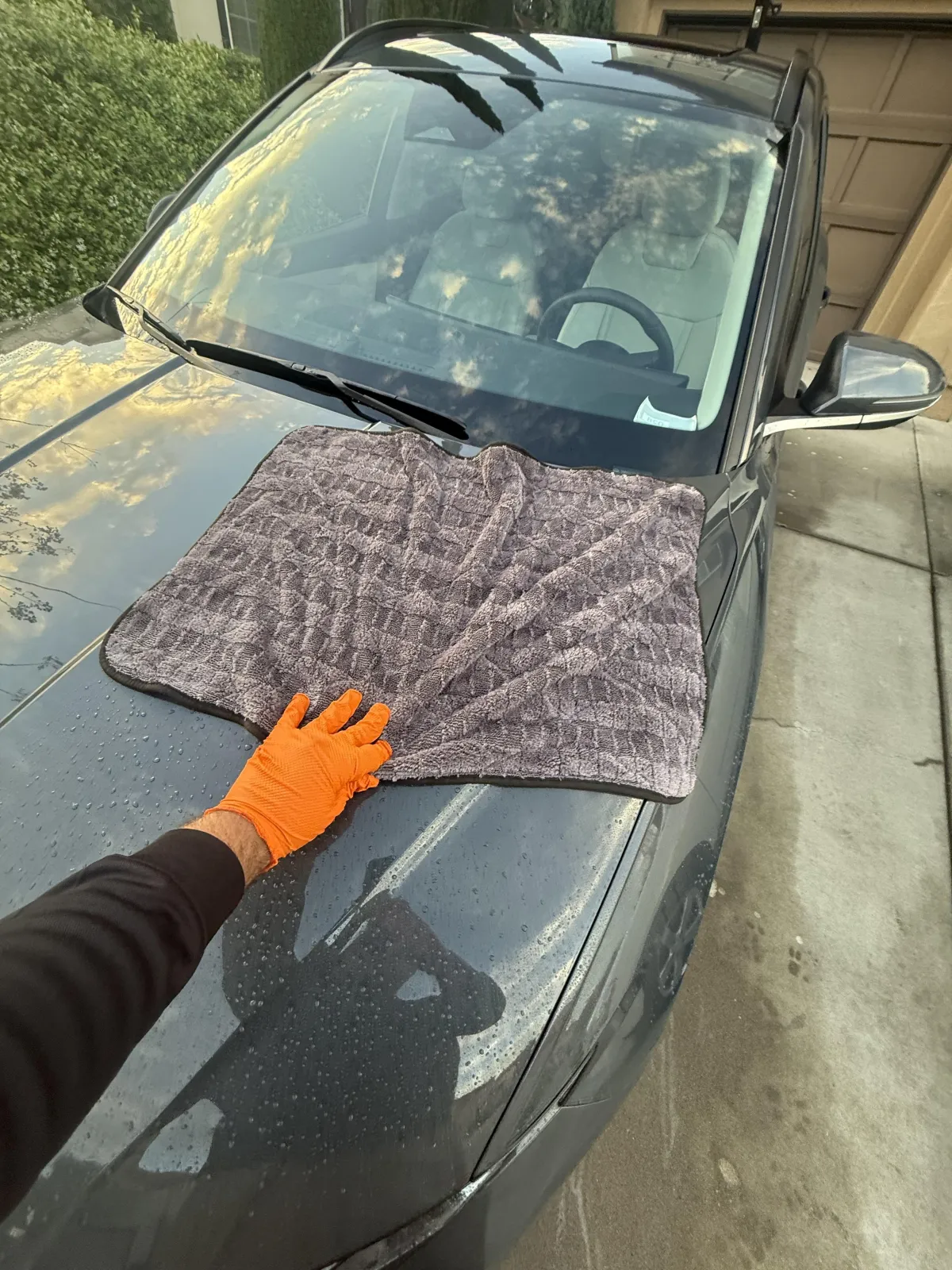
What Is Deionized Water?
What Is Deionized Water? (And Why It Matters in Car Detailing)
Water quality plays a major role in the outcome of any car wash or detail. One of the biggest differences between a basic wash and a professional service is the use of deionized (DI) water, which allows for a completely spot-free finish.
At Stiles Mobile Detailing, this is a standard part of delivering high-quality results—not an upsell or shortcut.
What Is Deionized Water?
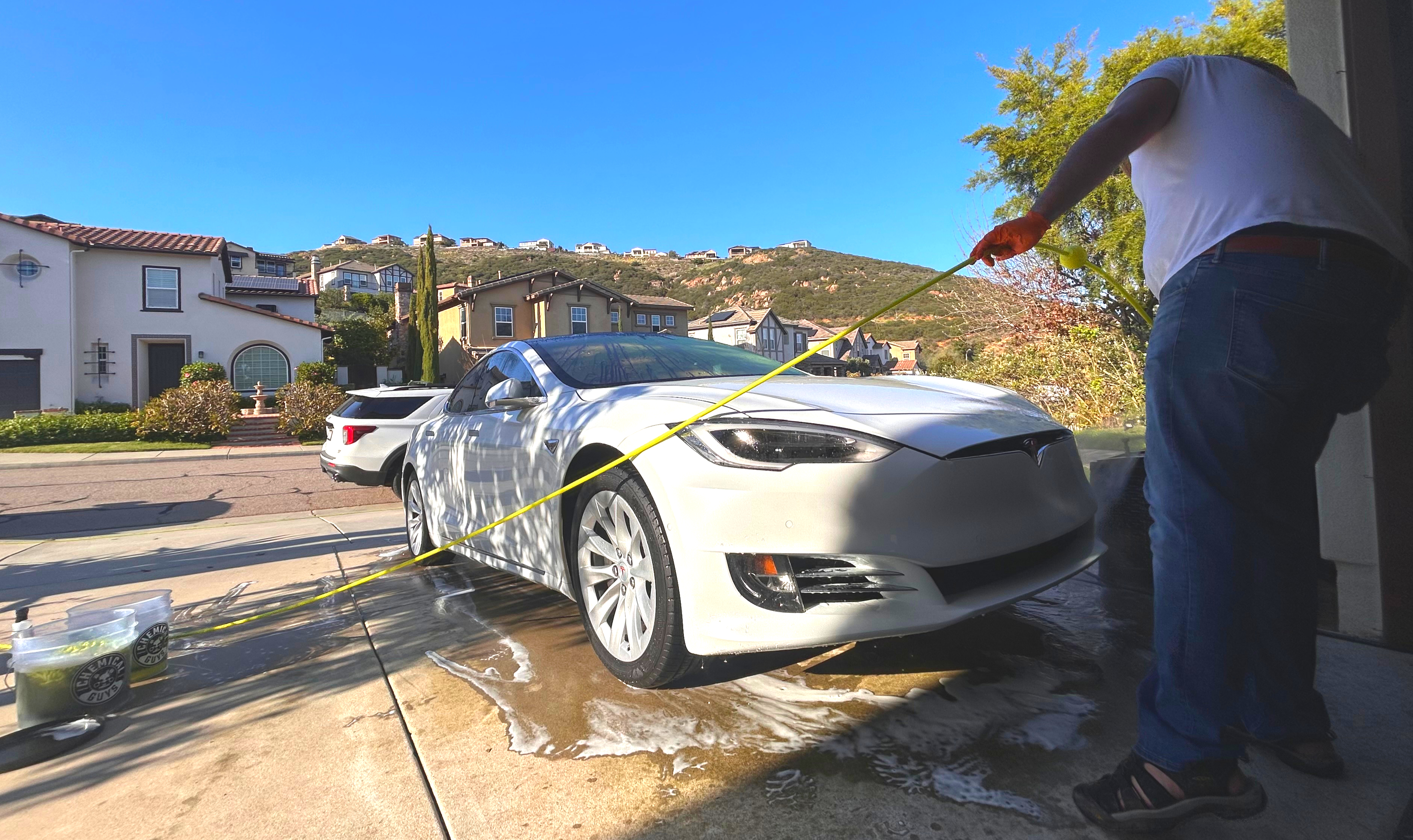
Deionized water is water that has had all dissolved minerals and ions removed through a process called ion exchange.
Typical tap water contains minerals such as:
Calcium
Magnesium
Sodium
Iron
These are measured as Total Dissolved Solids (TDS). When water evaporates, these minerals are left behind—causing spots and residue.
Deionized water removes these entirely, bringing TDS down to 0 ppm, meaning nothing is left behind after drying.
How Deionization Works
DI systems use specialized resin filters:
Cation resin removes positively charged ions (calcium, magnesium)
Anion resin removes negatively charged ions (chloride, sulfate)
This process replaces minerals with hydrogen and hydroxide, which combine to form pure water (H₂O).
The result is water that dries clean without leaving any trace behind.
Why Tap Water Causes Water Spots
When you wash your car with regular water, minerals stay on the surface after evaporation. This leads to:
Water spots on paint and glass
Streaking
Mineral buildup over time
In hot environments, this becomes worse because water evaporates quickly and bakes minerals into the surface.
Over time, this can lead to:
Etching in the clear coat
Dull paint
The need for polishing to correct damage
Benefits of Deionized Water in Detailing
Spot-Free Finish
With no minerals present, water dries without leaving residue behind.
Reduced Risk of Scratches
Less towel drying means less contact with the paint, reducing swirl marks.
Better Overall Appearance
Vehicles look cleaner, glossier, and more consistent.
Improved Protection
Sealants applied during services like a
👉 Wash & Seal (https://stilesmobiledetailing.com)
bond better to a clean, mineral-free surface.
Deionized Water vs. Filtered Water
Not all “clean water” is the same:
Filtered water removes dirt and some contaminants
Deionized water removes nearly all dissolved minerals
Many professional systems combine reverse osmosis and DI filtration to maximize performance and efficiency.
When Deionized Water Matters Most
DI water is especially important for:
Final rinses
Dark-colored vehicles
Direct sunlight conditions
High-end or well-maintained cars
This is why professional services like
👉 Full Service Detailing (https://stilesmobiledetailing.com)
rely on proper water systems to achieve consistent results.
Why We Use Deionized Water at Stiles Mobile Detailing
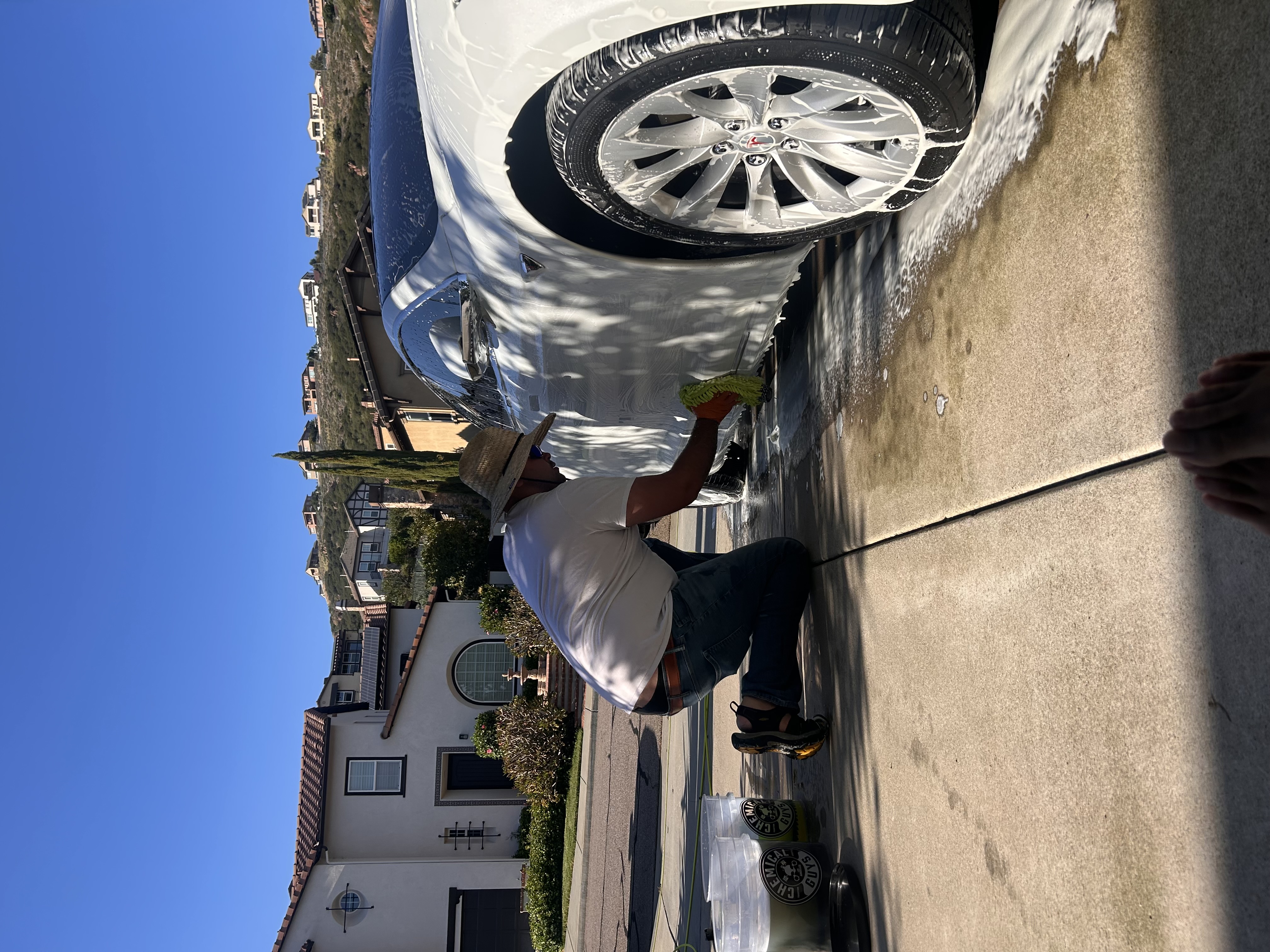
At Stiles Mobile Detailing, using deionized water is part of the process—not an upgrade.
It allows us to:
Deliver a true spot-free finish
Avoid unnecessary paint contact
Maintain a higher standard of work
Whether you’re booking a quick exterior clean or a full detail, the goal is the same: professional results that last longer and look better.
You can learn more about all available services here:
👉 https://stilesmobiledetailing.com
Conclusion
Deionized water is one of the key differences between a basic wash and a professional detail. By removing all minerals from the water, it ensures a cleaner finish, better protection, and long-term care for your vehicle.
If you’re looking for a detail that goes beyond just washing the surface, it starts with using the right tools—and that includes the water itself.


Pair With Ceramic Coating
For best results, we recommend applying ceramic coating after
correction to protect the restored finish.